
 By
By 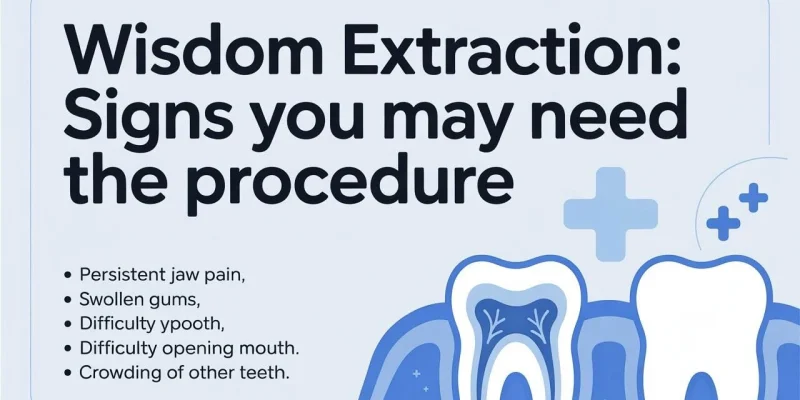
The removal of a Wisdom Tooth is a common dental procedure recommended when these teeth begin to cause oral health issues. Wisdom teeth are the last set of molars that usually appear in the late teens or early twenties.
While some people experience no problems, others may develop discomfort, crowding, or infections. In such situations, dentists may suggest Wisdom Extraction to prevent further complications and protect overall oral health.
Persistent Pain or Discomfort
One of the most common signs that a wisdom tooth may need to be removed is continuous pain at the back of the mouth.
This discomfort can occur when the tooth does not have enough space to grow properly or when it begins to press against nearby teeth.
If the pain becomes frequent or severe, a dental evaluation may determine whether Wisdom Extraction is the right solution.
Swollen or Bleeding Gums
Another sign to watch for is swelling or tenderness in the gums around the wisdom tooth area.
When a tooth partially emerges through the gums, bacteria and food particles can become trapped, leading to irritation or infection. This condition can cause redness, swelling, or bleeding gums, which may indicate the need for professional dental treatment.
Jaw Stiffness or Difficulty Opening the Mouth
Wisdom teeth problems can sometimes affect the surrounding jaw area. Patients may experience stiffness, discomfort while chewing, or difficulty opening their mouth fully. These symptoms can occur when the wisdom tooth is impacted or growing at an unusual angle.
Crowding of Nearby Teeth
Wisdom teeth often grow in areas where there is limited space. When this happens, they can push against nearby molars and create crowding or alignment issues.
Dentists often recommend monitoring these changes early because timely Wisdom Extraction can help prevent future orthodontic problems.
Recurring Infections
Repeated infections around the wisdom tooth area can also signal the need for removal. Bacteria trapped around partially erupted teeth may lead to recurring gum infections or inflammation.
Treating these infections repeatedly can be uncomfortable, so removing the problematic tooth may provide long-term relief.
Conclusion
Wisdom teeth can sometimes grow without causing any problems, but in many cases they may lead to pain, swelling, crowding, or infection. Recognizing the warning signs early is important for maintaining good oral health.
Consulting a dental professional allows you to determine whether removal is necessary. When recommended, timely treatment can help relieve discomfort and prevent more serious dental complications in the future.
FAQs
1. At what age do wisdom teeth usually appear?
Wisdom teeth typically appear between the ages of 17 and 25, although this can vary from person to person.
2. Does everyone need wisdom tooth removal?
No, not everyone needs removal. If wisdom teeth grow properly and do not cause problems, they may not require treatment.
3. Is the procedure painful?
Dental professionals use anesthesia to ensure comfort during the procedure, and most patients experience only mild discomfort afterward.
4. How long does recovery usually take?
Recovery time varies, but many people start feeling better within a few days, with full healing occurring over a couple of weeks.
5. Can wisdom teeth cause headaches or jaw pain?
Yes, impacted or misaligned wisdom teeth can sometimes cause pressure that leads to headaches or jaw discomfort.















Comments