
 By
By 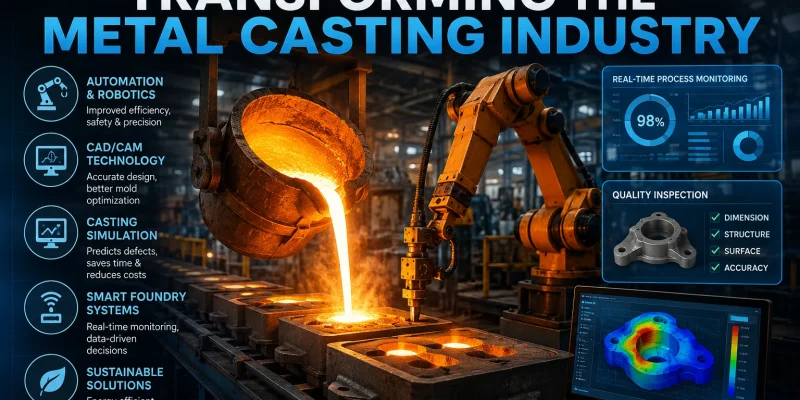
Introduction
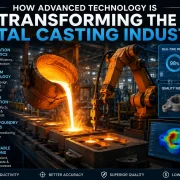
The metal casting industry has experienced major technological advancements in recent years. Modern manufacturing technologies are helping foundries improve production efficiency, product quality, precision, and sustainability.
From automation and robotics to simulation software and smart manufacturing systems, advanced technology is transforming how metal casting components are designed and produced.
Industries such as automotive, aerospace, railway, agriculture, oil & gas, and heavy engineering rely heavily on high-quality cast components. To meet increasing market demands, metal casting manufacturer are adopting advanced technologies that reduce defects, improve consistency, and enhance production speed.
Key Takeaways
- Advanced technology is improving efficiency and quality in metal casting.
- Automation and robotics reduce production errors and improve safety.
- Simulation software helps prevent casting defects before manufacturing.
- Smart foundry systems enhance process monitoring and productivity.
- Sustainable technologies are helping the casting industry reduce environmental impact.
Role of Technology in Modern Metal Casting
Advanced technology helps foundries achieve better control over the casting process while improving productivity and operational efficiency.
Key Objectives of Modern Casting Technology
- Improve casting quality
- Reduce production defects
- Increase manufacturing speed
- Lower material waste
- Enhance dimensional accuracy
- Improve workplace safety
Advanced Technologies Used in Metal Casting
1. Automation and Robotics
Automation systems are widely used in modern foundries for handling repetitive and high-temperature operations.
Benefits:
- Faster production
- Reduced human error
- Improved worker safety
- Consistent manufacturing quality
Common Applications:
- Mold handling
- Metal pouring
- Grinding and finishing
- Material movement
2. CAD and CAM Software
Computer-Aided Design (CAD) and Computer-Aided Manufacturing (CAM) software help manufacturers design and optimize casting components before production begins.
Advantages:
- Accurate product design
- Faster development process
- Reduced production errors
- Better mold design efficiency
3. Casting Simulation Technology
Casting simulation software allows manufacturers to predict defects before actual production.
Helps Reduce:
- Shrinkage defects
- Gas porosity
- Mold filling issues
- Cracking problems
Simulation technology saves time, material, and production costs.
4. CNC Machining Integration
Modern casting industries combine casting with CNC machining for higher precision and better finishing quality.
Benefits:
- Tight dimensional tolerance
- Smooth surface finish
- Improved component accuracy
- Faster post-processing
5. Smart Foundry Systems
Smart manufacturing technologies use sensors, data monitoring, and AI-based systems to optimize production performance.
Features:
- Real-time process monitoring
- Predictive maintenance
- Data-driven quality control
- Improved operational efficiency
Benefits of Advanced Technology in Metal Casting
Modern technologies provide several advantages for foundries and industrial manufacturers.
Key Benefits
- Higher production efficiency
- Better casting accuracy
- Reduced manufacturing defects
- Improved product consistency
- Lower operational costs
- Faster production cycles
- Enhanced sustainability
Importance of Sustainable Casting Technology
The metal casting industry is also focusing on environmentally friendly manufacturing practices.
Sustainable Solutions Include:
- Energy-efficient furnaces
- Recycling metal scrap
- Dust control systems
- Reduced emissions technology
- Eco-friendly molding materials
These technologies help reduce environmental impact while improving production efficiency.
Future of the Metal Casting Industry
The future of metal casting will continue to evolve with digital manufacturing and automation technologies.
Emerging Trends
- Artificial intelligence in foundries
- 3D printed molds and cores
- IoT-based monitoring systems
- Fully automated casting lines
- Advanced lightweight alloys
These innovations will help manufacturers produce stronger, lighter, and more precise industrial components.
FAQs
1. How is technology improving the metal casting industry?
Technology improves casting accuracy, reduces defects, increases production speed, and enhances manufacturing efficiency.
2. What is casting simulation software?
Casting simulation software predicts potential casting defects before production begins, helping reduce material waste and production costs.
3. Why are robotics used in foundries?
Robotics improve worker safety, increase production speed, and ensure consistent manufacturing quality.
4. What is a smart foundry?
A smart foundry uses sensors, automation, AI, and real-time monitoring systems to optimize casting operations.
5. How does advanced technology support sustainable casting?
Modern technologies reduce energy consumption, minimize waste, improve recycling, and lower industrial emissions.








Comments